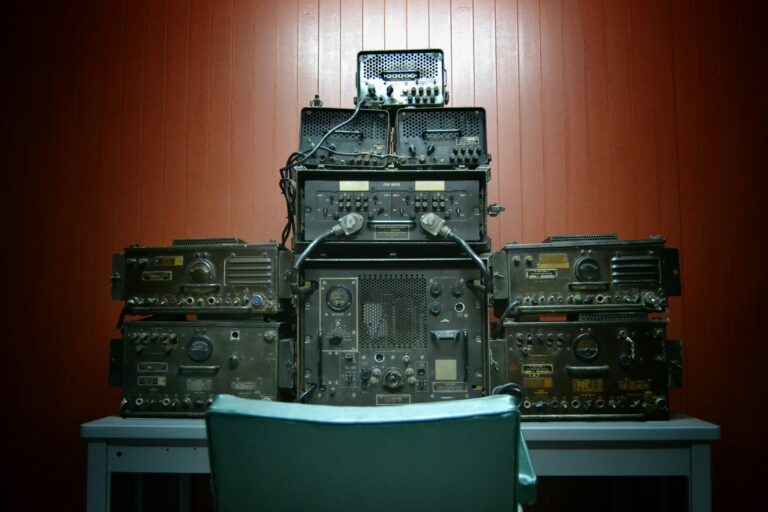




You can read about electromagnetic waves all semester, but the first time you actually hear your own radio signal bounce through the air, physics stops being theory and turns real. Amateur radio isn’t some old-school hobby — it’s a personal physics lab you can build with a soldering iron, a few resistors, and a stubborn sense of curiosity.
Every transmission you send is a physics experiment in motion. You’re testing wave frequency, signal strength, and electrical resistance every single time — even if you don’t realize it. Instead of trying to do my physics assignment on paper and sketching dull graphs, you’re watching real energy move and interact. You learn faster, and honestly, it sticks better.
A friend of mine, Daniel, built his first transmitter in high school. He didn’t have fancy gear — just scrap wire and a lot of YouTube tutorials. When he finally heard his own voice through his receiver, he said it felt like “electric magic.”
That’s what amateur radio does — it makes science talk back to you. Suddenly, Ohm’s Law, signal reflection, and resonance don’t look intimidating anymore. They’re happening right in front of you, through circuits you built yourself.
Why radio is the perfect at-home experiment base
Even better? It’s cheap, accessible, and endlessly creative. You don’t need a physics degree or a lab pass — just curiosity and a willingness to experiment. It’s hands-on learning for anyone who’s ever thought, “I wish I could actually see what all this theory means.” And if the math or report writing part still freaks you out, there’s always professional physics paper writing help out there to make your results sound as sharp as your signal.
So yeah, physics isn’t trapped in a classroom — it’s humming in every antenna, wire, and resistor sitting on your workbench. Once you’ve built your setup and heard that first clean frequency, you start craving more. That’s when frequency modulation steps in — the part of radio that teaches you the art of controlling waves like a true scientist.
How Does Frequency Modulation Teach You About Waves?
Frequency modulation (or FM) might sound technical, but it’s really just rhythm — waves dancing faster or slower to carry your message. The concept hits harder when you build it yourself. You twist a knob, the pitch shifts, static disappears, and suddenly, you’re feeling the laws of physics in real time.
For example, a student named Maya used her homemade FM transmitter as the basis for her internal assessment. She wrote in her reflection that she learned more about wave behavior from her radio setup than from any textbook. “It’s wild,” she said, “when your own signal teaches you what the Doppler effect actually sounds like.” She used her IB physics paper writing help notes to explain frequency shifts clearly — and scored top marks because her project actually worked.
Real-world test: tuning and signal clarity
Every time you tune your radio and find a clear frequency, you’re adjusting the wavelength and seeing resonance play out like a live experiment. It’s the perfect mix of logic and creativity. You’re not just doing theory — you’re doing physics. And trust me, the rush of hearing a signal you stabilized after hours of testing hits way harder than writing “constructive interference” in an essay.
FM is also a genius way to link physics with daily life. Think about it — that same principle keeps your favorite songs crisp on the radio and makes communication across the planet possible. So next time you’re tempted to pay someone to do my physics homework, maybe try building a small FM circuit first. You’ll learn faster, have more fun, and maybe even discover that your garage makes a better lab than your classroom ever did.
Why this matters in learning physics
And if writing the report later still feels like static noise, professional physics paper writing help can clean it up for you while you focus on experimenting. After all, understanding frequency modulation isn’t just about coding data — it’s about hearing physics come alive, one frequency at a time.
Once you’ve mastered your signal tuning and wave control, the next piece of your homemade lab puzzle is the antenna. It’s the part that connects your ideas to the air — where wavelength, resonance, and creativity collide. And that’s where physics really starts to show off.
What Does Antenna Length Tell Us About Wavelength and Resonance?
Alright, here’s where things get even more interesting — the antenna. It’s not just a random piece of metal sticking out of your setup. It’s basically the muscle behind your signal. Change the antenna length and you change everything — the clarity, the distance, the power. It’s the perfect real-world experiment to understand resonance and wavelength, and it’s so hands-on that even the toughest formulas finally make sense.
Let’s say you start trimming your antenna, cutting a few centimeters at a time. You’ll instantly hear how your signal gets stronger or weaker, depending on how close you are to that sweet resonance point. That’s λ/4 (lambda over four) in action — one of the most practical physics rules you’ll ever use without opening a textbook.
Simple home experiment: cutting and testing antennas
I met an old-school ham operator named Sergio who could feel when an antenna was off by a few millimeters. He didn’t even need measuring tools anymore — he just listened to how the signal bounced. Sergio used to joke that if he ever had to do my physics assignment again, he’d just point to his antenna and say, “That’s my homework.” And honestly, he wouldn’t be wrong. You learn everything — wave behavior, frequency response, and energy transfer — through one simple experiment.
So yeah, next time you’re buried in formulas trying to calculate resonance frequencies, remember: you can hear them with a radio. You can measure the relationship between length and wavelength using nothing more than a basic receiver and a curious mindset. It’s physics made real — no fancy lab, no whiteboard needed.
And if you ever have to explain that experiment in a report and need a little structure or polishing, a physics paper writing help expert can make it sound just as good as it works.
Now that your signal’s crisp and your antenna’s tuned, it’s time to get serious about the raw power behind it. Power and resistance might sound like boring circuit-theory stuff, but when you see how it affects transmission in real time, it hits different. That’s where the “physics lab” part of amateur radio really flexes.
How Can You Learn About Power, Resistance, and Transmission at Home?
You don’t need a massive transmitter to learn about power — just a little setup, a wattmeter, and patience. Once you start transmitting and measuring signal strength, you’re actually running one of the simplest physics experiments ever: testing how efficiently energy moves through a circuit.
Ohm’s Law in radio practice
When your signal’s weak, you’ll start thinking like an engineer — “Is it resistance? Is my grounding bad? Am I losing current through the cable?” Suddenly, you’re living Ohm’s Law instead of memorizing it. The formula V = IR stops being just letters on paper; it becomes the thing that explains why your voice sounds like a robot when resistance is too high.
A college student named Lena told me she first got into radio because her physics grades were slipping. She was tired of solving endless equations, so she built a small transceiver to see what all the theory looked like in action. Within weeks, she was graphing power loss, testing reflection coefficients, and writing one of the strongest lab reports her teacher had ever read. She laughed later and said, “Building a radio taught me more than paying someone to do my physics homework ever could.”
And she’s right. Amateur radio forces you to troubleshoot problems like a real physicist. Every small adjustment — adding resistance, changing wire thickness, tweaking voltage — teaches you how energy behaves. It’s a mix of creativity, analysis, and trial and error. Sure, there’ll be days when your circuit refuses to cooperate, but that’s part of the fun. You’re not memorizing theory — you’re controlling it.
Avoiding interference — a physics challenge
Still, when it’s time to turn your findings into a clean, structured report, it’s okay to get some physics paper writing help. After all, you’ve done the experimenting — now it’s just about explaining it clearly. If you ever get lost in formatting, citation styles, or word limits, it’s smart to ask professionals where physics writing needs the most improvement or who physics writing best fits your IB or college requirements.
And that’s the thing — every time you power up your setup and hear your signal bounce back clean, you’re doing physics that actually means something. Amateur radio doesn’t just teach theory — it teaches patience, logic, and creativity. And that’s exactly why it deserves the title of “the best physics lab you’ll ever build at home.”
Why Amateur Radio Beats Any Textbook for Learning Physics
Here’s the truth — you can read all the theories, memorize every formula, and still not feel how physics works. But once you start building your own radio, every equation starts coming alive. You’re no longer thinking about sine waves and circuits; you’re hearing them buzz, flicker, and respond. It’s messy, unpredictable, and sometimes chaotic — but that’s what makes it fun.
Amateur radio takes what schools often miss: the hands-on spark. You twist knobs, connect resistors, adjust frequencies, and suddenly realize that what you once thought was abstract is actually practical. A weak signal becomes a mini physics mystery. You test, fail, test again, and without even noticing, you start learning about resonance, reflection, and power loss like a real researcher.
One radio enthusiast I spoke with, Olga from Warsaw, said her whole understanding of electricity flipped the first time she built a receiver. “I used to pay someone to do my physics homework,” she admitted with a laugh, “because I thought I’d never get it. But when I made that first connection and actually heard my signal — that was it. I finally understood what voltage and current were doing.” That’s the magic of doing, not just reading.
When you think about it, your homemade setup is more than just a fun gadget — it’s a personal physics lab that never stops teaching. Every experiment you run teaches something new, and every fix you make is a micro-lesson in problem-solving. You stop asking where physics writing goes wrong or who physics writing helps because now, you’re living the theory you used to struggle to explain.
And if, after all the fun, you find yourself staring at a blank screen trying to turn your notes into a structured report — no worries. Getting professional physics paper writing help doesn’t make you less of a builder; it makes your work shine. Those experts can help you organize your reflections, data tables, and analysis so your writing looks as smart as your setup.
From Hobby to Academic Success
So yeah — skip the sterile lab benches and fluorescent lights. The best physics classroom is right in your home, humming at 14 MHz, waiting for you to press “transmit.” Amateur radio isn’t just a hobby; it’s a full-on physics experience that lets you experiment, fail, fix, and succeed — all while proving that science doesn’t just belong in textbooks.
If you’re ready to make physics more than formulas — build, tune, and listen. And if the writing part gets noisy, a little help to do my physics assignment might just keep your frequency clear.